Please log in, or sign up for a new account and purchase a subscription to continue reading.
We have used your information to see if you have a subscription with us, but did not find one. Please use the button below to verify an existing account or to purchase a new subscription.
Your current subscription does not provide access to this content. Please use the button below to manage your account.
A special gene that helps animals survive at high altitude could enable new treatments for , suggests new research.
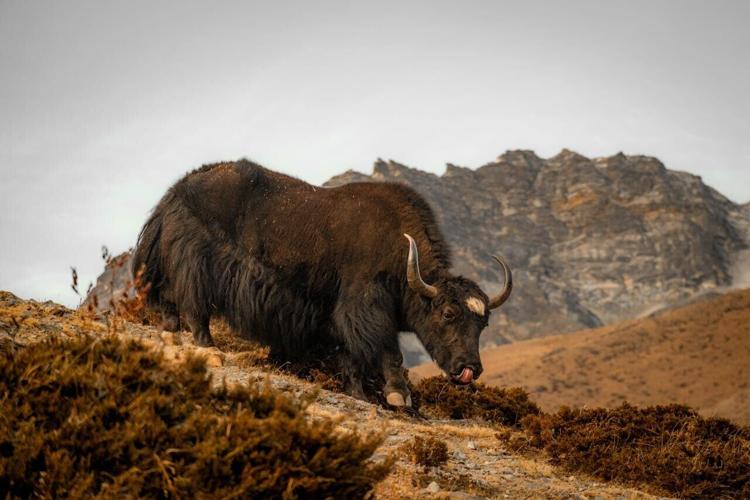
Scientists say that the genetic mutation that enables yaks to thrive high up mountains may hold the key to repairing nerve damage in conditions such as (MS) and cerebral paralysis.
The study, published in the journal , revealed a naturally existing pathway that promotes regeneration after nerve damage.
The discovery could open up new ways for treating diseases such as MS by leveraging molecules that are already present in the human body, say Chinese scientists.
Study corresponding author Professor Liang Zhang said: “Evolution is a great gift from nature, providing a rich diversity of genes that help organisms adapt to different environments.
“There is still so much to learn from naturally occurring genetic adaptations.�
He explained that the myelin sheath is a protective layer that surrounds nerve fibres in the brain and spinal cord, allowing nerve signals to transmit efficiently.
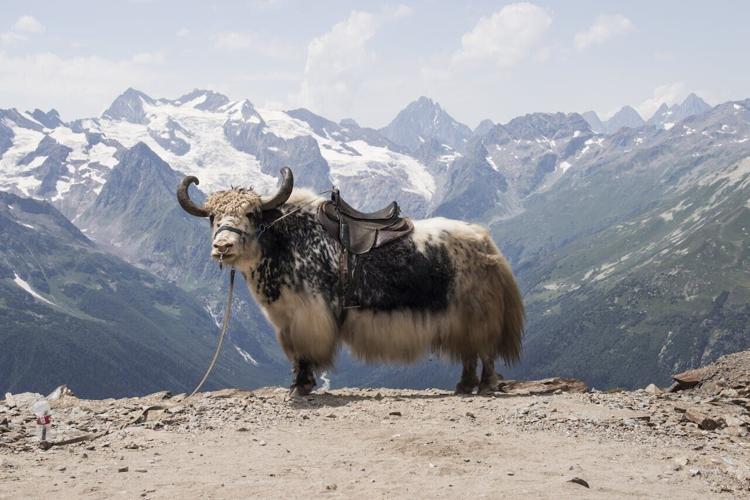
(Photo by Yaroslav Chaadaev via Pexels)
But insufficient oxygen during brain development can damage the layer, leading to conditions such as cerebral paralysis in new-born babies.
In adults, injuries to the myelin sheath are tied to which leads to the immune system mistakenly attacking and destroying the myelin sheath.
Reduced blood flow to the brain, often associated with ageing, can also damage myelin, contributing to conditions such as vascular dementia.
Previous research has found that animals living on the Tibetan Plateau - which has an average elevation of 14,700 feet above sea level - carry a mutation on a gene called Retsat.
Scientists suspected that the mutation helps animals such as yaks and Tibetan antelopes maintain healthy brain function despite chronically low oxygen levels.
Zhang and his team set out to investigate if the mutation could prevent myelin sheath damage.
They exposed new-born mice to low-oxygen conditions equivalent to elevations above 13,000 feet for about a week.
Zhang, from , said: "Mice carrying the Retsat mutation performed significantly better in learning, memory, and social behaviour tests than those with the standard version of the gene.
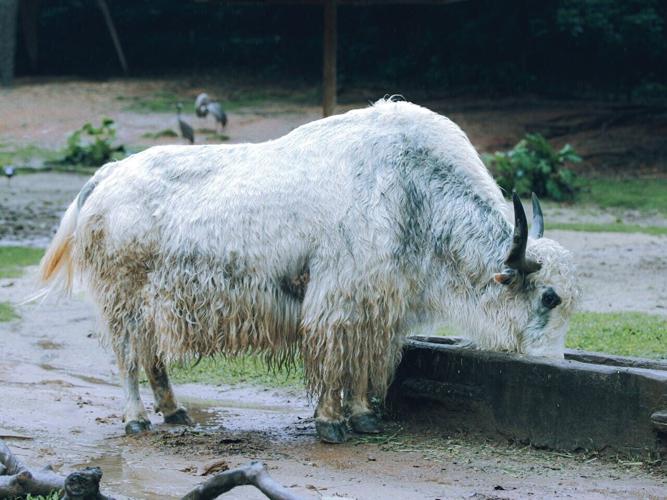
(Photo by Mehmet Turgut Kirkgoz via Pexels)
By Talker
"Brain analyses also revealed that the high-altitude gene mice had higher levels of myelin surrounding their nerve fibres."
The research team then examined whether the Retsat mutation could repair myelin sheath damage similar to that .
They found that in mice carrying the mutation, the myelin sheath regenerated "much faster and more completely" after injury.
The injury sites also had more mature oligodendrocytes, a type of cell responsible for producing myelin.
Zhang said: "Further investigation showed that mice with the mutation produced higher levels of ATDR, a metabolite derived from vitamin A, in their brains.
"The Retsat mutation appeared to increase the enzymatic activity that converts vitamin A into its metabolites, which in turn promotes the production and maturation of myelin-producing oligodendrocytes."
When the team gave ATDR to mice with an , the severity decreased, and they showed improved motor function.
Zhang says the discovery could lead to new treatments for MS which currently focus on suppressing immune activity.
He added: “ATDR is something everyone already has in their body.
"Our findings suggest that there may be an alternative approach that uses naturally occurring molecules to treat diseases related to myelin damage."
Keep it Clean. Please avoid obscene, vulgar, lewd,
racist or sexually-oriented language. PLEASE TURN OFF YOUR CAPS LOCK. Don't Threaten. Threats of harming another
person will not be tolerated. Be Truthful. Don't knowingly lie about anyone
or anything. Be Nice. No racism, sexism or any sort of -ism
that is degrading to another person. Be Proactive. Use the 'Report' link on
each comment to let us know of abusive posts. Share with Us. We'd love to hear eyewitness
accounts, the history behind an article.








(0) comments
Welcome to the discussion.
Log In
Keep it Clean. Please avoid obscene, vulgar, lewd, racist or sexually-oriented language.
PLEASE TURN OFF YOUR CAPS LOCK.
Don't Threaten. Threats of harming another person will not be tolerated.
Be Truthful. Don't knowingly lie about anyone or anything.
Be Nice. No racism, sexism or any sort of -ism that is degrading to another person.
Be Proactive. Use the 'Report' link on each comment to let us know of abusive posts.
Share with Us. We'd love to hear eyewitness accounts, the history behind an article.