

Since the beginning of time, man has had a desire to communicate and not just with the person sitting in the cave or room with them.
We’ve drawn photos on walls to tell a story, sent couriers long distances to deliver wax sealed letters of importance, raised flags, sent lamp or mirror signals, created the Pony Express, developed Morse code, sent telegraphs, listened to stories and songs over a transistor radio, created telephones-corded and wireless, built amateur radios at home and communicated with space stations in outer space.
Now, imagine yourself as a 12-year-old kid. You understand you don’t need immense power to communicate around the world. It’s not something found only in science fiction movies — you just need the right frequency and some electronic equipment.
It seems almost magical to build a device with your own hands that connects you with someone halfway across the globe, right?
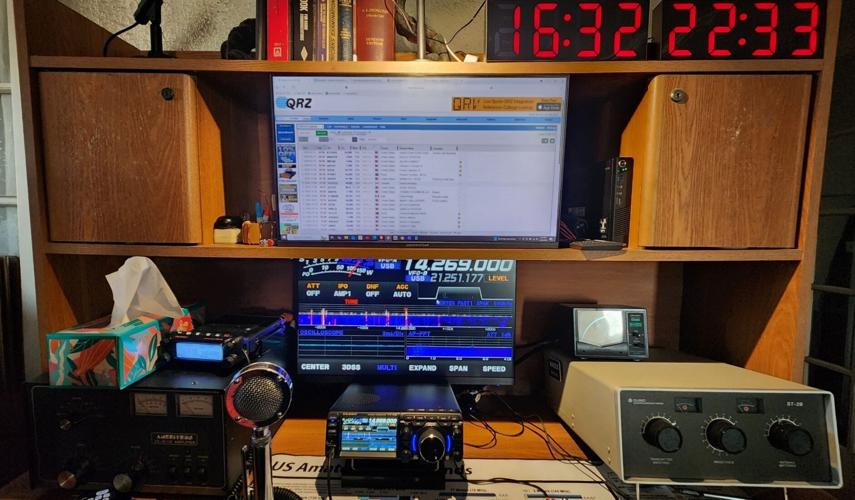
And for Hartsville resident Marshal Myhan, it was just that. He built his radio, learned Morse code and held a novice amateur radio license at the age of 12.
Myhan’s enthusiasm for amateur radio, or as some refer to it, ham radio, even wore off on his older brother. As life went on, interest in amateur radio waned, but 50 years later, Myhan is back in the game operating his rig and participating in local amateur radio clubs and organizations in the surrounding counties. He can be found using his brother’s old call sign, W4EOS.
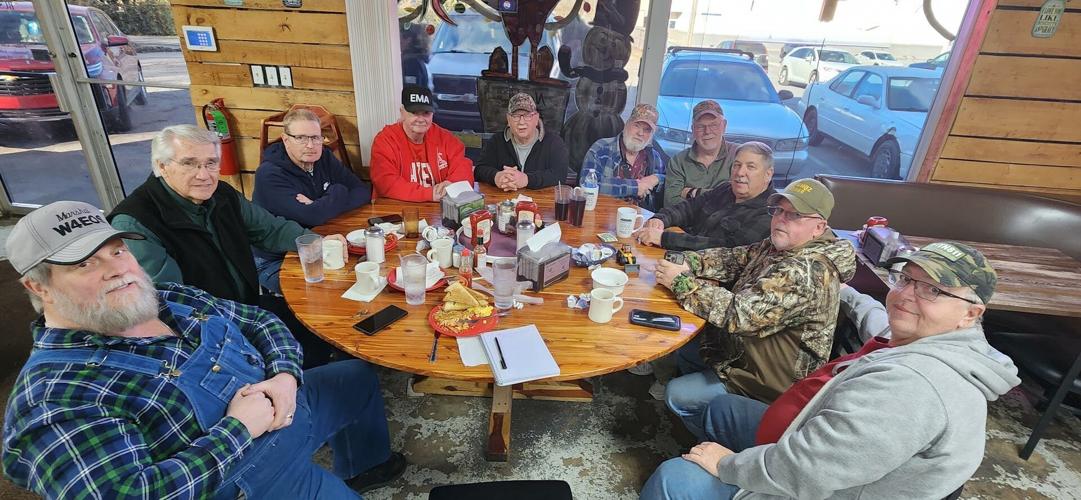
At Myhan’s invite, I recently joined a group of amateur radio operators that meet for breakfast in Hartsville on a regular basis.
Learning about this popular hobby of combining electronics and communication from the men around the table helped me to understand what a service it brings to people worldwide. Being the daughter of a truck driver who loved hearing her dad talk on a CB radio with the handle of “Crooked Stick,” I found the experience informative and entertaining.
“Amateur radio operators get involved for many reasons. They all have in common a basic knowledge of radio technology and operating principles and pass an examination for the FCC license to operate on radio frequencies known as the amateur bands,” said Stephen Shaner, president of the Macon Area Ham Radio Society club. “These bands are radio frequencies allocated by the FCC for use by ham radio operators.”
Over 600,000 radio amateurs operate in the United States and over 2,000,000 worldwide.
Amateur radio leverages ionospheric skip and high-frequency (HF) bands (3-30 MHz) to bounce signals thousands of miles across the world with no need of a cell phone or the internet. Building your own radio is a highly respected aspect of the hobby today.
Building or obtaining the radio and antenna and learning how to operate the system is just part of the process of becoming an amateur radio operator. Before tuning in the bands and making that first call, the operator will need to obtain an amateur radio license from the Federal Communications Commission (FCC).
Amateur radio operators are active in nearly every country of the world and range from the age of five to over 100. Ham radio is a term that originates from professional telegraphers of the early 1900s describing amateur radio hobbyists as “ham-fisted.”
“As a retired police officer and over 30 years’ experience with amateur radio, I just enjoy the hobby,” said Art Powell. “Over the years, amateur radio has evolved in so many ways and is involved with so many fingers of communication.”
For many, the operation of their amateur radios is more than a hobby. It creates connection and community. The radio operators find others with an interest in amateur radio through global communications, clubs, events and community service.
The men around the table that I spoke with come from different walks of life, vary in ages, have different skill levels, licensing and years of experience, but they all take great pride in what they do and they all support one another in becoming better operators. Mostly, they enjoy fellowship with one another.
Rich VanRensselaer retired from the trucking business where he spent many hours talking on his CB radio. He missed those conversations with folks from all over the place. After taking a new job, he was introduced to amateur radio. He’s held a technician’s license for about 20 years.
“It’s an activity I just enjoy, and I enjoy meeting with and learning from this group,” he said.
While Trousdale County does not currently have an Amateur or Ham Radio club, many of the surrounding counties such as Macon, Smith, Sumner and Wilson do.
With over 30 years of experience with amateur radio and experience in building antennas, Bill Esquilla enjoys sharing his knowledge with others and promoting amateur radio.
“When I first started with amateur radio, we built our own radios. I really enjoyed that,” said Esquilla.
Ron Richardson is a member of the Sumner County Amateur Radio Association and has a background in communications and broadcasting. After retiring, he found being involved in amateur radio kept him connected to his past career and to folks who enjoy a common interest. Roger Darbonne is from Lafayette. He has a military background and is a newbie to amateur radio and uses a digital system. Kirk Sutherland has been involved with amateur radio for nine years and uses Morse code with his radio system. All three men credit Esquilla with assisting them with their set ups.
Steve Yorlano also has over 30 years of experience with amateur radio and holds an Amateur Extra license.
“The hobby of amateur radio is varied in so many ways,” said Yorlano. “Parks on the Air is a site for international portable amateur operations that promote emergency awareness and communications from national/federal and state/provincial level parks for activating a park unit and hunting those activations. There are games and contests, just something for everyone.”
“Anything you want to get involved with, ham radio is an opportunity with it,” said Rick Vantrease. “There is a dedicated group called SouthBEARS (Southern Baptist Emergency Amateur Radio Service) that coordinates ham radio communication for the Southern Baptist Disaster Relief and even an Amateur Radio Lighthouse Society that uses amateur radio to activate, promote and preserve maritime beacons worldwide.”
Darbonne’s wife saw the importance of his ham radio hobby after the loss of cell services and no way to communicate with their children.
“Now, there’s ‘radio money’ for all the kids to have a setup so we can communicate with one another,” said Darbonne.
Vantrease shares his love of amateur radio with his wife who holds an Amateur Extra, the highest level of license you can hold in amateur radio.
More than a hobby, amateur radio is a crucial backup system when infrastructure like cell networks and the internet fail.
“Amateur radio is a great form of communication when all else goes to crap,” said Esquilla.
A ham operator offers a lifeline for communication during times of emergencies, often assisting local, state and federal agencies, as well as organizations such as the American Red Cross and Salvation Army, by offering public service communications and situational reports. Amateur radio operators often participate in Amateur Radio Emergency Service (ARES) or Radio Amateur Civil Emergency Service (RACES), a FEMA-sponsored volunteer program.
Getting involved with amateur radio starts with obtaining your equipment, but before you take the test for licensure, those interested should register with the FCC to obtain an FCC Registration Number and create an account on the FCC Universal Licensing System. Once the application fee is paid, a call sign is received.
To obtain a Technician License, the entry-level license that focuses on local, VHF/UHF and emergency communications, applicants are required to pass a 35-question exam which covers regulations and basic radio principles. Today, there is no Morse code requirement. Applicants must pass with 74% to obtain their license.
Two other license levels, the General License which is intermediate level (global/HF) and the Amateur Extra which is the highest level of license with full privileges, are next steps for ham radio enthusiasts.
To prepare for the exams, popular resources include , Ham Radio School and Ham Radio Prep. The final exam is administered by volunteer examiners with sessions held in person by local radio clubs or online. Interested applicants can search for sessions on the National Association for Amateur Radio website at .
The National Association for Amateur Radio was founded in 1914 as The American Radio Relay League and is a noncommercial organization of radio amateurs. The mission is to promote and to protect the art, science and enjoyment of amateur radio, and to develop the next generation of radio amateurs.
“Amateur radio operation is more than a hobby to many of us,” said Myhan. “Many of us here want to see the younger generation involved and seek opportunities to inform on and promote our hobby to all demographics. Amateur radio is a worthy avocation which offers participants opportunities to serve others and develop STEM aptitudes. There are no age restrictions in FCC licensing. It is easy and surprisingly inexpensive to get started. The guys here are always willing to help someone get started and mentor them through the process.”
To find a club in your area, visit the Macon Area Ham Radio Society, Smith County Amateur Radio Club, Sumner County Amateur Radio Association or Wilson Amateur Radio Club websites or Facebook pages.


(0) comments
Welcome to the discussion.
Log In
Keep it Clean. Please avoid obscene, vulgar, lewd, racist or sexually-oriented language.
PLEASE TURN OFF YOUR CAPS LOCK.
Don't Threaten. Threats of harming another person will not be tolerated.
Be Truthful. Don't knowingly lie about anyone or anything.
Be Nice. No racism, sexism or any sort of -ism that is degrading to another person.
Be Proactive. Use the 'Report' link on each comment to let us know of abusive posts.
Share with Us. We'd love to hear eyewitness accounts, the history behind an article.